Back From the Dead: A Complete Guide to Reviving a Coleman PowerMate That's Been Sitting for Years

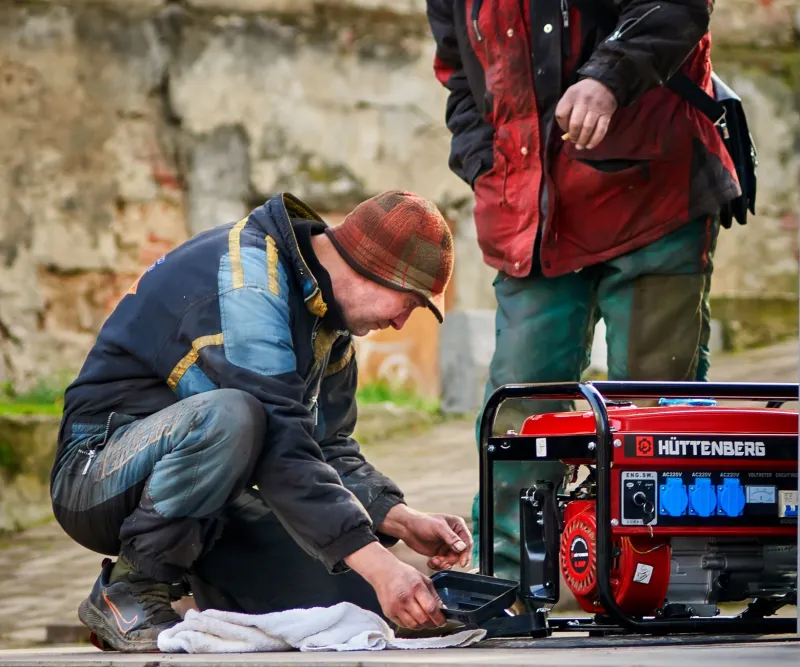
Photo: Dietmar Rabich, CC BY-SA 4.0, via Wikimedia Commons
Some of the best Coleman PowerMate generators out there aren't sitting on a dealer's floor — they're sitting in garages, storage units, and farm sheds, forgotten for years. Maybe you inherited one from a relative. Maybe you grabbed one at an estate sale for next to nothing. Maybe you rediscovered your own machine after a move and realized it hasn't seen fuel in four years.
Whatever the backstory, you're now staring at a machine that probably looks rough and almost certainly won't start. The question isn't whether it looks dead — it's whether it's actually worth saving.
Spoiler: more often than not, it is. But you need to go in with a plan.
First, Do a Realistic Assessment
Before you spend a Saturday afternoon or a chunk of money on parts, take an honest look at what you've got. Neglect is survivable. Abuse and serious mechanical damage are a different story.
Start with the basics. Check the oil — pull the dipstick or remove the drain plug and see what comes out. Thick, black sludge is bad but not necessarily fatal. A milky, gray color means water got in, which is a more serious red flag. No oil at all? That tells you something about how this machine was treated.
Look at the frame and tank for rust. Surface rust on the frame is normal and cosmetic. Heavy pitting on the fuel tank, especially inside, is a bigger deal — flaking rust in the fuel system will destroy a carburetor fast. Spin the engine over by hand using the recoil pull or by rotating the flywheel. If it turns freely, you're in decent shape. If it's locked up solid, you may be dealing with a seized piston, which is a much harder fix.
If the engine rotates, the tank isn't completely rotted out, and the alternator looks intact, you've probably got something worth working on.
Drain Everything That's in There
Old fuel is enemy number one. Gasoline that's been sitting for a year or more — especially anything with ethanol — breaks down into a varnish-like residue that coats every surface it touches. Don't try to run it out or dilute it with fresh gas. Get it out completely.
Drain the fuel tank and dispose of the old gas properly — most auto parts stores and recycling centers will take it. Then do the same with the carburetor bowl. If the drain screw is frozen, soak it with penetrating oil before you force it.
Once the tank is empty, slosh some fresh gasoline around in it to rinse out loose debris, then drain that too. If you see rust flakes coming out, you'll want to consider a tank sealer product down the road, but for now, clean is the goal.
Change the oil regardless of what it looks like. Fresh oil costs a few bucks. Running a revived engine on degraded, contaminated oil after all this work would be a shame.
The Carburetor Is Usually the Heart of the Problem
If there's one component that kills more stored generators than anything else, it's the carburetor. Even a small amount of old fuel left inside will leave behind deposits that block the tiny passages and jets the engine depends on to run.
You don't necessarily need to replace it — a thorough cleaning often does the job. Pull the carb off, disassemble it carefully, and soak all the metal parts in carburetor cleaner for a few hours. A can of compressed air and some fine wire can help clear stubborn passages. Pay special attention to the main jet and the emulsion tube — those are the spots most likely to be clogged.
If the rubber parts — the float needle seat, any gaskets, or o-rings — are cracked or deteriorated, replace them. Carburetor rebuild kits for most Coleman PowerMate engines are inexpensive and widely available. Putting a fresh kit in while you've already got the carb apart is just smart.
While you're in the neighborhood, swap out the fuel filter too. It's cheap, and a plugged filter will undermine everything else you've done.
Don't Skip the Ignition System
A generator that's been sitting for years often has a spark plug that's fouled, corroded, or just worn out. Pull it, inspect it, and replace it. New plugs are inexpensive and it's not worth second-guessing a component that costs less than a cup of coffee.
Check the spark plug wire and boot for cracks. Inspect the ignition coil gap if you can — on many Coleman PowerMate engines, there's a small air gap between the coil and the flywheel magnets that should be set to spec (typically around 0.010 inches, but check your model's documentation). A coil that's too far out of spec won't fire reliably.
Dealing With Rust and Stuck Parts
If you're working on a machine that's been stored outside or in a damp environment, you'll run into rust at some point. Surface rust on the engine block and frame is mostly cosmetic — wire brush it off and hit it with some rust-inhibiting paint if you care about appearances.
Stuck fasteners are a bigger practical concern. Penetrating oil applied the night before you work is your best friend. Heat from a propane torch can help on especially stubborn bolts, but be careful around fuel components. If you strip a bolt, you're adding real time and frustration to the project.
Air filters on long-stored machines are almost always trash. Paper elements absorb moisture and can harbor insects or debris. Pull it, toss it, and install a new one.
The First Start Attempt
Once you've worked through the fuel system, carburetor, ignition, oil, and air filter, you're ready for the moment of truth. Add fresh, ethanol-free fuel if you can find it in your area — it's worth the extra effort on a machine you're trying to coax back to life.
Choke it fully, set the throttle to the start position, and pull. Don't expect it to fire on the first pull. It may take several attempts to get fuel moving through the freshly cleaned system. If it sputters or briefly catches, that's a good sign — keep at it.
If it starts and runs rough, let it warm up before adjusting anything. A lot of initial roughness clears up once the engine reaches operating temperature and works through any residual deposits.
When It's Not Worth the Effort
Honesty matters here. Some machines are too far gone. A seized engine, a cracked block, severe internal rust, or a burned-out alternator winding can push repair costs past the value of the machine — or past what a comparable used unit would cost you.
If you've gone through all the steps above and it still won't fire, a small engine mechanic can do a compression test and give you a clearer picture of what's going on internally. That diagnostic step, usually pretty affordable, can save you from throwing more time and money at something that's genuinely done.
But if compression is decent, the engine turns freely, and your fuel and ignition systems are clean? You've probably got a runner on your hands — and a Coleman PowerMate that'll serve you well for years to come. There's something genuinely satisfying about bringing one of these machines back from the edge. Ask anyone who's done it.