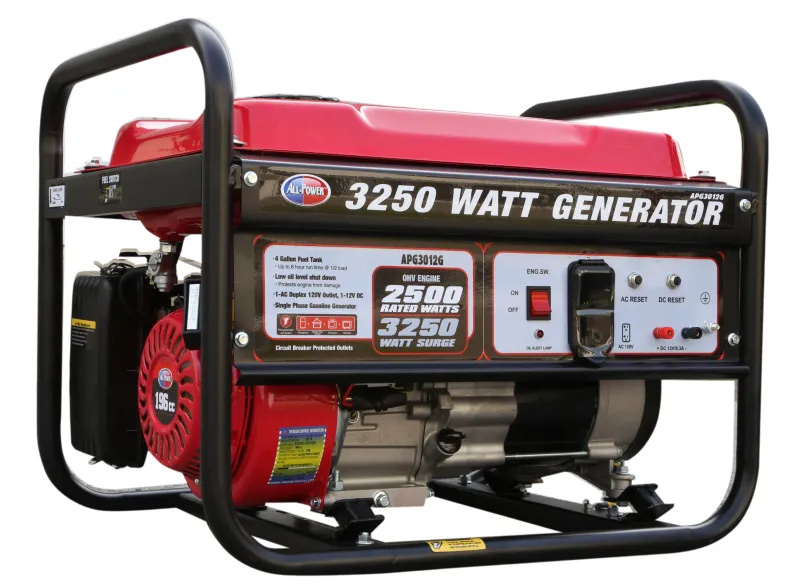
What's Quietly Rotting Inside Your Coleman PowerMate's Fuel Tank (And How to Stop It Before It Gets Expensive)
Photo: Chris Allen, CC BY-SA 2.0, via Wikimedia Commons
You bought your Coleman PowerMate to be reliable when you need it most — storms, job sites, camping trips, tailgates. The last thing you want is to pull the start cord during a power outage and get nothing but a sputtering mess. But for a surprising number of owners, that's exactly what happens, and the culprit isn't the carburetor, the spark plug, or even old gas. It's the fuel tank itself.
Fuel tank degradation is one of those problems that builds slowly and silently. By the time you notice symptoms, the damage is often already done — and the repair costs can hit anywhere from $150 to well over $400 depending on how far things have progressed. If you live anywhere in the South, the Gulf Coast, the Pacific Northwest, or along the Eastern Seaboard, your generator is at even higher risk just from the ambient humidity alone.
Let's break down what's actually going on, how to spot it early, and what you can do to protect your investment.
The Science Behind Fuel Tank Corrosion (Without the Chemistry Lecture)
Most Coleman PowerMate generators use steel fuel tanks. Steel is durable and cost-effective, but it has one well-known weakness: it rusts when exposed to moisture and oxygen. Inside a generator's fuel tank, those conditions are almost always present to some degree.
Here's the cycle that plays out in millions of small engines across the country:
- Fuel evaporates or gets drained between uses, leaving empty space inside the tank.
- Condensation forms on the interior walls, especially when temperatures swing between warm days and cool nights — a classic scenario for anyone storing a generator in a garage or shed.
- Ethanol in modern pump gas (usually E10, meaning 10% ethanol) actively attracts and absorbs water from the air. That water settles at the bottom of the tank, right where your fuel pickup sits.
- Rust begins forming on exposed metal surfaces. Over time, those rust particles break loose and become sediment floating in your fuel.
- That sediment travels through your fuel lines, clogs your fuel filter, and eventually reaches your carburetor — where it causes all kinds of expensive damage.
In coastal areas, salt air accelerates this process dramatically. Owners in places like Florida, the Carolinas, Louisiana, and coastal California often see tank corrosion develop in just a few years, even with reasonable maintenance habits.
Signs Your Fuel Tank Might Already Be in Trouble
The good news is that fuel tank problems usually give you some warning before they become catastrophic. Here's what to watch for:
Discolored fuel. Drain a little gas from the tank into a clear container. Healthy fuel is amber-colored and relatively clear. If you see a brownish tint, floating particles, or a layer of darker liquid sitting at the bottom, you've likely got contamination from rust or sediment — or both.
Rough running or surging. When sediment partially clogs a fuel jet or fuel filter, the engine doesn't get a consistent fuel supply. You'll notice the RPMs hunting up and down, or the generator struggling under load when it normally handles it fine.
Fuel filter clogging more frequently than normal. If you've replaced your fuel filter recently and it's already gunked up again, the contamination is coming from somewhere upstream — almost certainly the tank.
Visible rust or staining around the fuel cap or seams. External rust is a strong indicator of what's happening on the inside. Pay close attention to welds, seams, and anywhere the tank connects to other components.
Strong smell of varnish or a stale fuel odor. This points to old, degraded fuel that's been sitting — which accelerates sediment buildup even in otherwise clean tanks.
Diagnosing the Extent of the Damage Yourself
Before you call a small engine shop, you can do a pretty solid preliminary assessment on your own. Start by draining the tank completely — never skip this step, and make sure you're working outdoors away from any ignition sources.
Once drained, use a flashlight to peer inside the tank opening. Look for:
- Orange or reddish-brown discoloration on the tank walls (active rust)
- Dark, flaky deposits clinging to the bottom or sides (rust scale and sediment)
- A white or chalky residue (mineral deposits from water evaporation)
If you see light surface staining but no heavy scale or flaking, you're likely in the early stages and a good cleaning plus a tank sealer can buy you years of additional life. If the interior walls look heavily pitted or you can see actual holes or pinhole leaks, replacement is probably your most cost-effective path forward.
What Repairs Actually Cost
Let's talk real numbers, because this is where a lot of owners get blindsided.
- Fuel tank cleaning and flush: $50–$100 DIY (using a tank cleaning kit and fresh fuel), or $80–$150 at a small engine shop.
- Fuel tank sealer treatment: Products like Kreem or POR-15 Tank Sealer run $25–$60 for a kit and can extend tank life significantly when applied correctly.
- Fuel filter replacement: Usually $10–$25 in parts, minimal labor if you do it yourself.
- Carburetor cleaning or rebuild: $50–$150 in parts, $100–$250 at a shop — this is where costs really climb if sediment has been running through the system unchecked.
- Full tank replacement: Depending on your specific Coleman PowerMate model, replacement tanks range from $60 to $200+ in parts. Factor in shop labor if you're not comfortable doing it yourself, and you could be looking at $250–$400 total.
The math makes a pretty compelling case for staying proactive.
How to Prevent Fuel Tank Degradation Going Forward
The single most effective thing you can do is never store your generator with fuel in the tank for more than 30 days — and if you must store it longer, use a quality fuel stabilizer like Sta-Bil or Sea Foam from day one, not as an afterthought weeks later.
Beyond that, here are habits that make a real difference:
Run the tank dry before long-term storage. After adding stabilizer and running it through the system, let the generator run until it stalls on its own. This removes most of the fuel from the carburetor bowl and lines.
Use ethanol-free fuel when possible. It's available at many marinas, some hardware stores, and fuel stations that cater to outdoor power equipment users. Yes, it costs a bit more per gallon, but the reduction in moisture absorption is worth it for a machine you're relying on.
Inspect and replace your fuel filter annually. It's cheap insurance. A clogged filter is telling you something about what's in your tank.
Store your generator in a climate-controlled or low-humidity environment when possible. A garage is better than outside; a conditioned space is better than an unconditioned garage, especially in humid climates.
Check the tank visually every season. Make it part of your spring startup routine and your fall storage checklist. Catching early rust means a $40 fix instead of a $400 one.
Bottom Line
Your Coleman PowerMate's fuel tank isn't something most people think about until something goes wrong. But given how much a neglected tank can cost you — in parts, labor, and the headache of a generator that fails exactly when you need it — it's worth adding to your regular maintenance radar. A little attention twice a year can easily save you several hundred dollars over the life of the machine. And when that next storm rolls through or the job site needs power, you'll be glad you took the time.