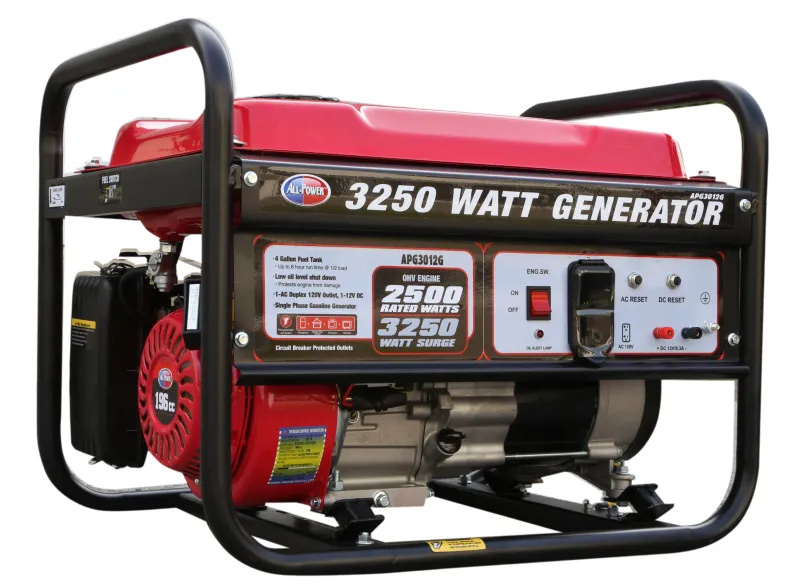
Is Your Coleman PowerMate Quietly Killing Your Electronics? The Truth About Generator Power Quality

Photo by Photo by Justin Wilkens on Unsplash on Unsplash
You've got your Coleman PowerMate humming along in the driveway, extension cords snaking through the garage door, and the lights are on. Everything looks fine. But somewhere between that spinning engine and your flat-screen TV, something ugly might be happening — and you'd never know it until something stops working.
This isn't a scare tactic. It's a real issue that Coleman PowerMate owners run into more often than you'd expect, and it's one of those things that doesn't announce itself until the damage is already done.
What "Clean Power" Actually Means
The electricity coming out of your wall outlet at home isn't just electricity — it's electricity delivered in a very specific, consistent way. Your utility company works hard to maintain what's called a stable sine wave: a smooth, rhythmic flow of alternating current cycling at exactly 60 Hz, with voltage hovering right around 120 volts.
Generators, especially conventional gasoline-powered ones, don't always hit that mark. When engine load changes — say, your refrigerator compressor kicks on, or you plug in a second appliance — the generator's engine has to adjust its speed. That adjustment isn't always instant or smooth. The result can be voltage spikes, brief drops (called sags), or a distorted sine wave that looks more like a jagged mountain range than a clean curve.
For a lamp or a box fan, that's no big deal. But for anything with a microprocessor — a laptop, a smart TV, a modern refrigerator with digital controls, a CPAP machine — that dirty power is like feeding sand into a precision engine. It may work for a while. It may not.
The Two Main Threats: Surges and Total Harmonic Distortion
There are really two things to watch out for when you're running appliances off a generator.
Voltage surges happen when the generator briefly pushes out more voltage than it should. This can occur when a large load suddenly drops off — like when a power tool motor stops — and the engine momentarily overshoots before stabilizing. A surge lasting even a fraction of a second can degrade or destroy sensitive components inside electronics.
Total Harmonic Distortion (THD) is a measure of how "clean" the power waveform is. Utility power typically runs below 5% THD. Many conventional generators — including some Coleman PowerMate models under heavy or variable load — can push THD well above that threshold. Sensitive electronics, especially anything with a switched-mode power supply (which is most modern devices), can struggle with high-THD power over time.
Which Coleman PowerMate Models Handle This Better
Not all Coleman PowerMate generators are created equal when it comes to power quality.
The inverter-based models in the Coleman PowerMate lineup are the clear winners here. Inverter generators use a two-step process: they generate AC power, convert it to DC, and then electronically invert it back to AC. That final step lets them produce a much cleaner sine wave — typically well under 3% THD — that's genuinely safe for sensitive electronics right out of the box.
Conventional Coleman PowerMate generators — the larger, open-frame units commonly used for home backup and job sites — produce power quality that varies based on engine load. At around 50% load, they tend to perform best. At very low or very high load levels, power quality can degrade. That doesn't make them bad generators — they're workhorses built for powering high-draw equipment — but it does mean you need to think more carefully about what you're plugging into them.
Practical Surge Protection Strategies for Coleman PowerMate Owners
So what do you actually do about this? The good news is you've got options, and they don't have to be expensive.
Use a quality surge protector — not a cheap power strip. There's a real difference between a $6 power strip and a proper surge protector with a joule rating. Look for surge protectors rated at 1,000 joules or higher for electronics you really care about. These devices absorb voltage spikes before they reach your equipment.
Consider a UPS (Uninterruptible Power Supply) for critical devices. A UPS does double duty: it protects against surges and also smooths out power inconsistencies because your device is actually running off the UPS battery, which delivers clean, regulated power. This is the gold standard for computers, medical equipment like CPAP machines, and anything you truly can't afford to lose.
Don't run your generator at near-empty or near-maximum load. The sweet spot for power quality on a conventional generator is roughly 50-75% of rated capacity. Running a 5,500-watt generator with only a lamp and a phone charger plugged in isn't just inefficient — it can actually produce worse power quality than a moderate load would.
Let the generator warm up before connecting sensitive electronics. Give it two or three minutes to stabilize before plugging in anything with a microprocessor. The first moments of startup are often the most electrically unstable.
Separate your loads thoughtfully. Run your refrigerator, sump pump, and window AC unit off the generator directly. Run your laptop, TV, and phone charger through a good UPS or surge protector. Don't mix high-draw motor loads on the same circuit as delicate electronics if you can avoid it.
The Appliances Most at Risk
Not everything is equally vulnerable. Here's a quick rundown of what deserves the most protection:
- Laptops and desktop computers — extremely sensitive to both surges and dirty power
- Smart TVs and home theater equipment — modern electronics with complex internal circuits
- CPAP and BiPAP machines — medical devices that can be expensive and critical to health
- Modern refrigerators and washing machines — newer appliances with digital control boards are far more vulnerable than older mechanical models
- Phone chargers and small electronics — lower risk but not immune, especially cheap chargers
Older, simpler appliances — incandescent bulbs, basic fans, older refrigerators without digital controls, power tools — are much more forgiving of imperfect power.
Don't Wait for Something to Die
Here's the frustrating thing about power quality damage: it's often cumulative. A single big surge might kill a device outright, but more often, repeated exposure to high THD or minor voltage irregularities slowly degrades components over months. Your TV doesn't die the day of the storm — it dies six months later, and you never connect the dots.
Protecting your gear doesn't require a degree in electrical engineering. A good surge protector for sensitive electronics, a UPS for your most critical devices, and a little awareness about load management will take care of the vast majority of the risk.
Your Coleman PowerMate is a serious piece of equipment built to keep you going when the grid lets you down. A little attention to what you're plugging into it makes sure it's doing the job it's supposed to do — powering your home, not slowly wearing it out.